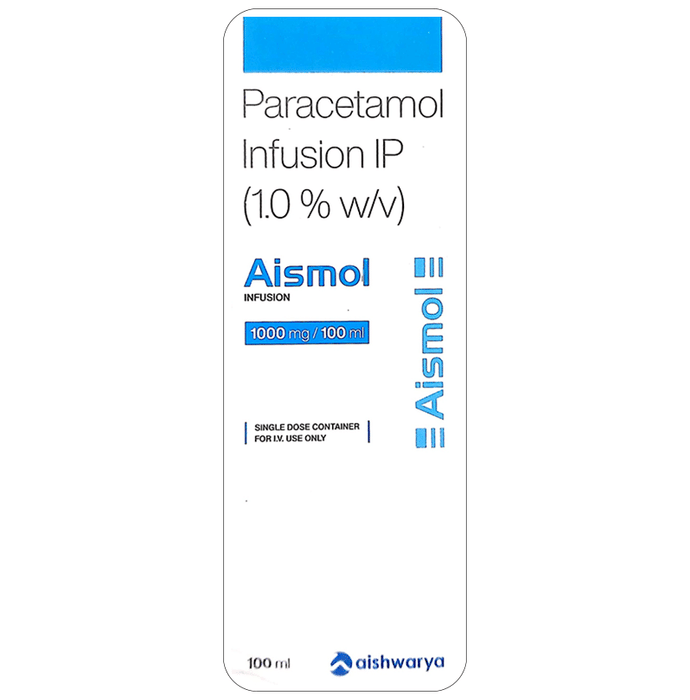
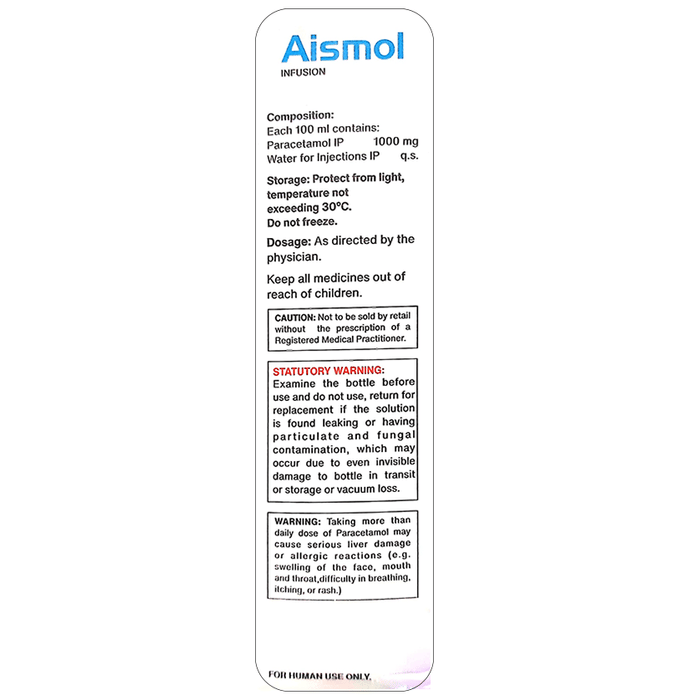
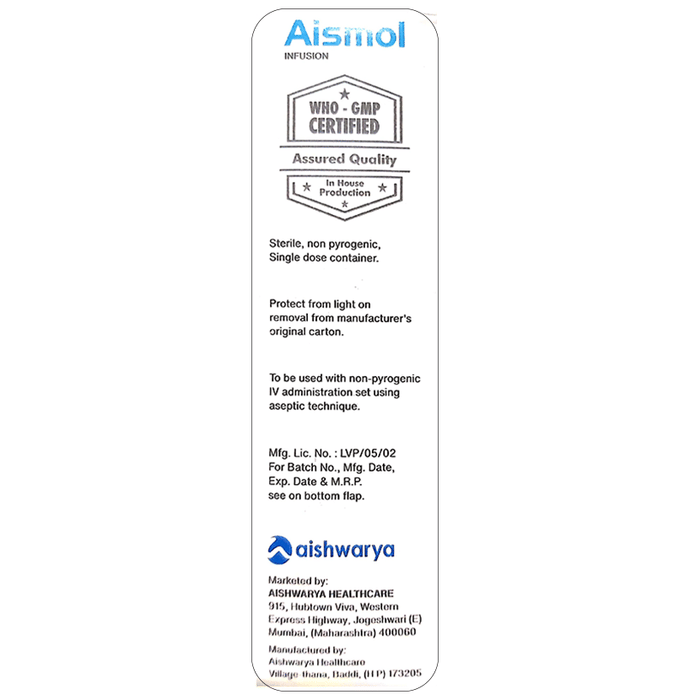
In Pain relief Aismol Infusion is a common painkiller used to treat aches and pains. It works by blocking chemical messengers in the brain that tell us we have pain. It is effective in relieving pain caused by headache, migraine, nerve pain, toothache, sore throat, period (menstrual) pains, arthritis, and muscle aches. This medicine is very widely used and very rarely causes side effects if taken at the right dosage. Take it as it is prescribed to get the most benefit. Do not take more or for longer than needed as that can be dangerous. In general, you should take the lowest dose that works, for the shortest possible time. It is also the first choice of painkiller during pregnancy or breastfeeding.
Your doctor or nurse will give you this medicine. Kindly do not self-administer.
- Alcohol : CAUTION
Alcohol should be used with caution while taking Aismol Infusion. | - Pregnancy : CONSULT YOUR DOCTOR
The safety of Aismol Infusion during pregnancy has not been established. There are no adequate and well-controlled studies in pregnant women, and animal data on reproductive toxicity are insufficient. Your doctor will weigh the benefits and any potential risks before prescribing. | - Breast feeding : CAUTION
Aismol Infusion should be used with caution during breastfeeding. Breastfeeding should be held until the treatment of the mother is completed and the drug is eliminated from the body. | - Driving : CONSULT YOUR DOCTOR
It is not known whether Aismol Infusion alters the ability to drive. Do not drive if you experience any symptoms that affect your ability to concentrate and react. Please consult your doctor. | - Kidney : CAUTION
Aismol Infusion should be used with caution in patients with kidney disease. Dose adjustment may be needed.However, Aismol Infusion contains paracetamol which is considered the safest painkiller for kidney disease patients. | - Liver : CONSULT YOUR DOCTOR
There is limited data available on the use of Aismol Infusion in patients with liver disease.However, the use of Aismol Infusion is not recommended in patients with severe liver disease and active liver disease.
If you miss a dose of Aismol Infusion, consult your doctor.
How is Aismol Infusion administered?::: Aismol Infusion should be administered under the supervision of a trained healthcare professional or a doctor only. It should not be self-administered. The dose of the medicine will depend on the condition you are being treated for and will be decided by your doctor. Follow your doctor?s instructions carefully to get maximum benefit from Aismol Infusion.| What if I vomit after taking Aismol Infusion?::: If you vomit in less than 30 minutes after having a dose of Aismol Infusion tablets or syrup, retake the same dose again. If you vomit after 30 minutes of a dose, you do not need to take another one until the next standard dose.| What are the serious side effects of taking an excess of the Aismol Infusion?::: Overdose of Aismol Infusione may cause severe life-threatening liver injury. Taking more than the prescribed dose may also cause kidney injury, decreased platelet count, and even coma. Early symptoms of an overdose include nausea, vomiting, and general tiredness. Immediately consult a doctor or reach an emergency in case of a suspected overdose.| When will I feel better after taking the Aismol Infusion?::: Usually, you will start feeling better after about half an hour of taking a Aismol Infusion.| Is Aismol Infusion an antibiotic?::: No, Aismol Infusion is not an antibiotic. It works as a painkiller and fever-reducing medicine.| Is Aismol Infusion safe for children?::: Aismol Infusion is considered safe for children only when used as directed by the doctor.| Can I take Aismol Infusion and ibuprofen together?::: Ibuprofen and Aismol Infusion are safe medicines, but both should not be used together. Consult your doctor if you are not sure.| Does Aismol Infusion make babies sleepy?::: No, Aismol Infusion does not make babies sleepy. It is a pain-relieving medicine that is also used to control high fever.| What if I vomit after taking Aismol Infusion?::: If you vomit in less than 30 minutes after having a dose of Aismol Infusion tablets or syrup, retake the same dose again. If you vomit after 30 minutes of a dose, you do not need to take another one until the next standard dose.| When will I feel better after taking the Aismol Infusion?::: Usually, you will start feeling better after about half an hour of taking a Aismol Infusion.| How often can I take the Aismol Infusion?::: You should only take four doses of Aismol Infusion in 24 hours. There should be a gap of at least 4 hours between two doses. Do not take Aismol Infusion for more than 3 days without consulting a doctor first.| Does Aismol Infusion make babies sleepy?::: No, Aismol Infusion does not make babies sleepy. It is a pain-relieving medicine that is also used to control high fever.| Is Aismol Infusion safe for children?::: Aismol Infusion is considered safe for children only when used as directed by the doctor.| Is Aismol Infusion an antibiotic?::: No, Aismol Infusion is not an antibiotic. It works as a painkiller and fever-reducing medicine.| Can I take Aismol Infusion and ibuprofen together?::: Ibuprofen and Aismol Infusion are safe medicines, but both should not be used together. Consult your doctor if you are not sure.| How long does a Aismol Infusion take to work?::: Aismol Infusion takes around 30-45 min to start working and show its effects. It is advised to take this medicine for the duration suggested by the doctor. Consult your doctor if you experience any bothersome side effects.| What are the serious side effects of taking an excess of the Aismol Infusion?::: Overdose of Aismol Infusione may cause severe life-threatening liver injury. Taking more than the prescribed dose may also cause kidney injury, decreased platelet count, and even coma. Early symptoms of an overdose include nausea, vomiting, and general tiredness. Immediately consult a doctor or reach an emergency in case of a suspected overdose.
Aismol Infusion is an analgesic (pain reliever) and anti-pyretic (fever reducer). It works by blocking the release of certain chemical messengers that cause pain and fever.
-Imatinib mesylate (Oral Route): Moderate
Talk to your doctor if you notice any unusual symptoms. Paracetamol may decrease the metabolism of Imatinib mesylate.
| -Bemiparin (Injection Route): Moderate
If concurrent use is essential, watch out for symptoms such as fatigue, nausea, loss of appetite, dark urine or jaundice and consult your doctor if you experience them. They may adjust the doses as per the observations. Concurrent use may increase the risk of liver damage.
| -Certoparin (Injection Route): Moderate
If concurrent use is essential, watch out for symptoms such as fatigue, nausea, loss of appetite, dark urine or jaundice and consult your doctor if you experience them. They may adjust the doses as per the observations. Concurrent use may increase the risk of liver damage.
| -Dalteparin (Injection Route): Moderate
If concurrent use is essential, watch out for symptoms such as fatigue, nausea, loss of appetite, dark urine or jaundice and consult your doctor if you experience them. They may adjust the doses as per the observations. Concurrent use may increase the risk of liver damage.
| -Enoxaparin (Injection Route): Moderate
If concurrent use is essential, watch out for symptoms such as fatigue, nausea, loss of appetite, dark urine or jaundice and consult your doctor if you experience them. They may adjust the doses as per the observations. Concurrent use may increase the risk of liver damage.