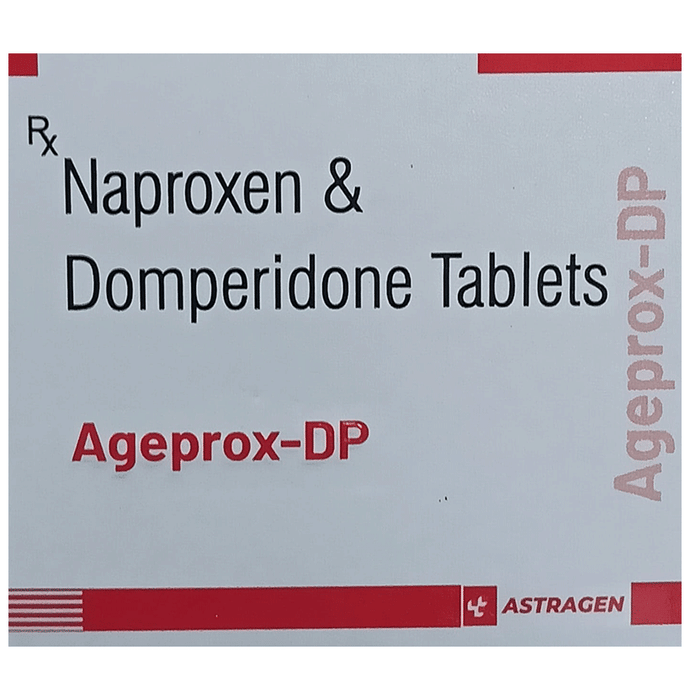
In Prevention of Migraine Ageprox-DP Tablet blocks chemicals responsible for pain sensation and also blocks signals that cause nausea/vomiting associated with migraines. By preventing and reducing the frequency of migraine headaches, it can help you carry out your daily activities and have a better quality of life.
Take this medicine in the dose and duration as advised by your doctor. Swallow it as a whole. Do not chew, crush or break it. Ageprox-DP Tablet may be taken with or without food.
- Alcohol : UNSAFE
It is unsafe to consume alcohol with Ageprox-DP Tablet | - Pregnancy : CONSULT YOUR DOCTOR
Ageprox-DP Tablet is not recommended during pregnancy as there is positive evidence of fetal risk based on animal studies. However, it may still be prescribed by a doctor in situations where the benefits outweigh the risks. | - Breast feeding : CAUTION
Ageprox-DP Tablet should be used with caution during breastfeeding. Breastfeeding should be held until the treatment of the mother is completed and the drug is eliminated from the body. | - Driving : UNSAFE
Ageprox-DP Tablet may decrease alertness, affect your vision, or make you feel sleepy and dizzy. Do not drive if these symptoms occur.Ageprox-DP Tablet may make you feel dizzy, depressed, sleepy, tired, or make it difficult to sleep. It may also affect your vision. This may affect your driving ability. | - Kidney : CAUTION
Ageprox-DP Tablet should be used with caution in patients with severe kidney disease. Dose adjustment may be needed. | - Liver : UNSAFE
Ageprox-DP Tablet is unsafe to use in patients with liver disease and should be avoided.Use of Ageprox-DP Tablet is not recommended in patients with moderate and severe liver disease.
If you miss a dose of Ageprox-DP Tablet, take it as soon as possible. However, if it is almost time for your next dose, skip the missed dose and go back to your regular schedule. Do not double the dose.
What is Ageprox-DP Tablet and what is it used for?::: Ageprox-DP Tablet is used to treat migraine headaches, especially when they are associated with nausea or vomiting. It helps reduce migraine symptoms such as head pain, nausea, vomiting, and sensitivity to light or sound. The medicine works by blocking certain chemical signals in the body that cause pain and inflammation, while also helping control nausea associated with migraines. It should be taken only as prescribed by a doctor and not used regularly for other types of headaches without medical advice.| How should I take Ageprox-DP Tablet?::: Take Ageprox-DP Tablet exactly as prescribed by your doctor. Swallow the tablet whole with water and do not crush or chew it. It may be taken with or without food, but taking it at the same time each day helps maintain consistent effects. If it causes stomach discomfort, taking it after food may help. Do not change the dose or schedule on your own. Consult your doctor if you miss doses often or if symptoms persist.| What are the side effects of Ageprox-DP Tablet?::: Common side effects of Ageprox-DP Tablet may include headache, dizziness, tiredness, ringing in the ears, skin rash, or mild vision changes. Some people may also experience stomach discomfort or nausea. These effects are usually mild and may improve as the body adjusts to the medicine. However, consult your doctor if side effects persist, worsen, or become bothersome. Consult your doctor immediately if you have black stools, vomit blood, or severe stomach pain.| Can I drink alcohol while taking Ageprox-DP Tablet?::: It is not recommended to drink alcohol while taking Ageprox-DP Tablet. Alcohol may increase dizziness and the risk of stomach irritation or bleeding. It may also make it harder to notice unwanted reactions from the medicine. Since the body is already dealing with migraine symptoms, alcohol may worsen discomfort or dehydration. For safety, avoid alcohol during treatment and consult your doctor if you have concerns.| Who should avoid taking Ageprox-DP Tablet?::: Ageprox-DP Tablet should be used with caution and only under a doctor?s advice in people who are pregnant, have kidney or liver disease, heart problems, or high blood pressure. It may not be suitable during pregnancy unless clearly prescribed. Breastfeeding mothers should also consult a doctor before using it. Extra care is needed if you take other medicines or have ongoing health conditions. Always share your full medical history with your doctor before starting Ageprox-DP Tablet.| Can Ageprox-DP Tablet affect driving ability?::: Ageprox-DP Tablet may cause dizziness, sleepiness, tiredness, or vision problems in some people. These effects can reduce alertness and may affect your ability to drive or operate machinery safely. If you feel dizzy, unusually tired, or notice vision changes after taking the medicine, avoid driving or using heavy machines until you feel normal again. Consult your doctor if these symptoms persist.| Can I take Ageprox-DP Tablet every day?::: Ageprox-DP Tablet should only be used in the dose and duration recommended by your doctor. It is generally taken when migraine symptoms occur or as directed for prevention, and should not be used more frequently or in higher doses than prescribed. If your headaches become frequent or severe, consult your doctor rather than increasing the dose yourself. Repeated or excessive use may worsen headaches over time. Seek urgent medical care if symptoms such as severe weakness, fainting, chest pain, breathing difficulty, seizures, confusion, black stools, or severe dehydration occur.| How many times a day can Ageprox-DP Tablet be taken?::: The number of times you should take Ageprox-DP Tablet depends on your doctor?s instructions and your medical condition. Always follow the dosing schedule provided by your doctor and do not increase the frequency on your own. Taking more than recommended may increase the risk of side effects. If the medicine upsets your stomach, your doctor may advise taking it after food and maintaining good hydration.
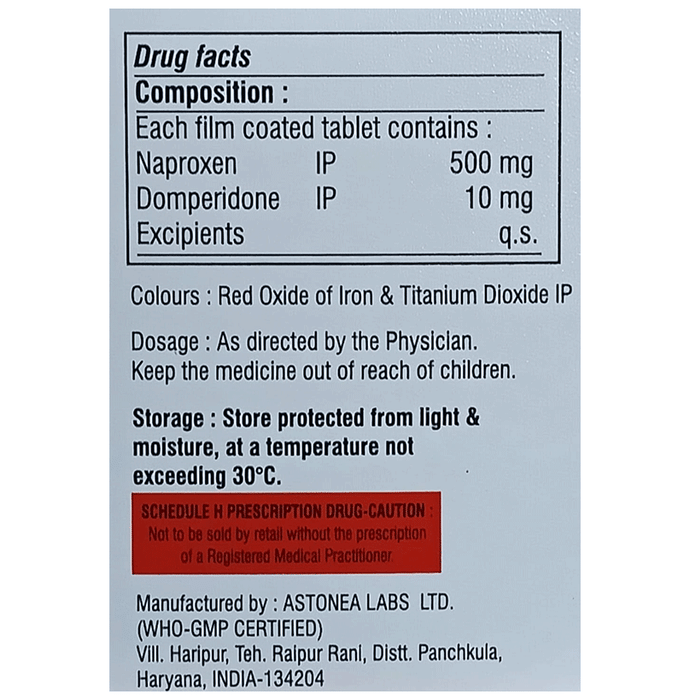
Ageprox-DP Tablet is a combination of two medicines: naproxen and domperidone. Naproxen is a non-steroidal anti-inflammatory drug (NSAID) that works by blocking the release of certain chemical messengers that cause migraine pain. Domperidone works on the part of the brain that controls nausea and vomiting associated with migraine. Together, these medicines help relieve migraine symptoms.