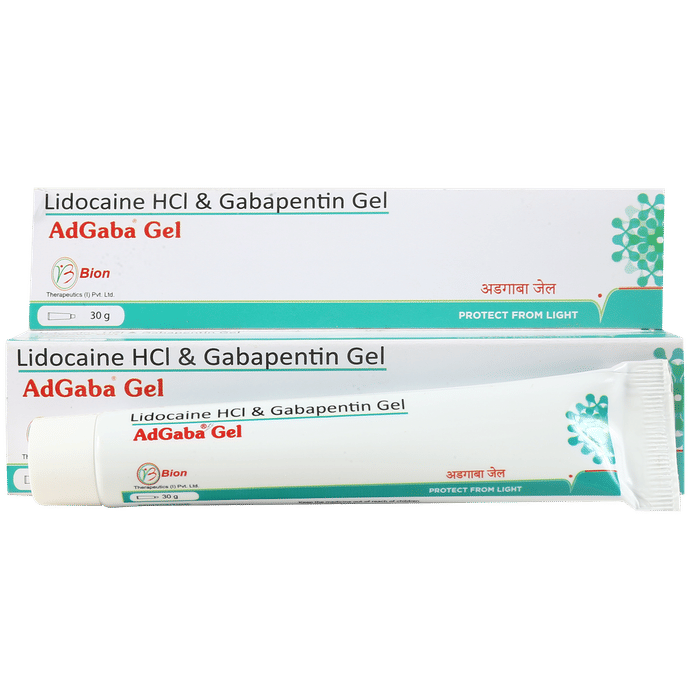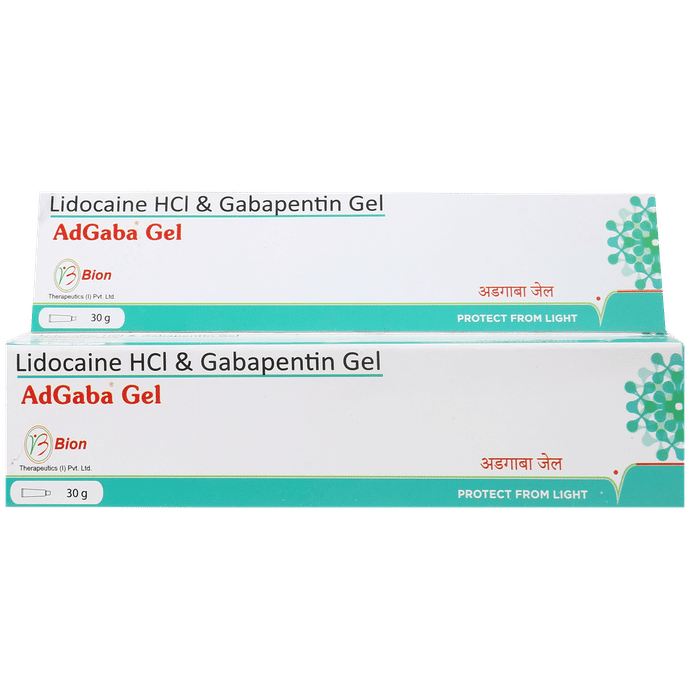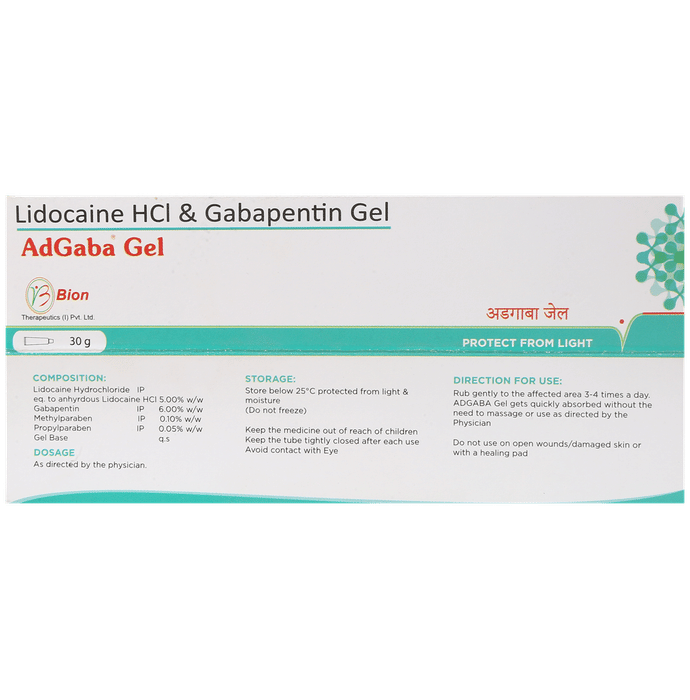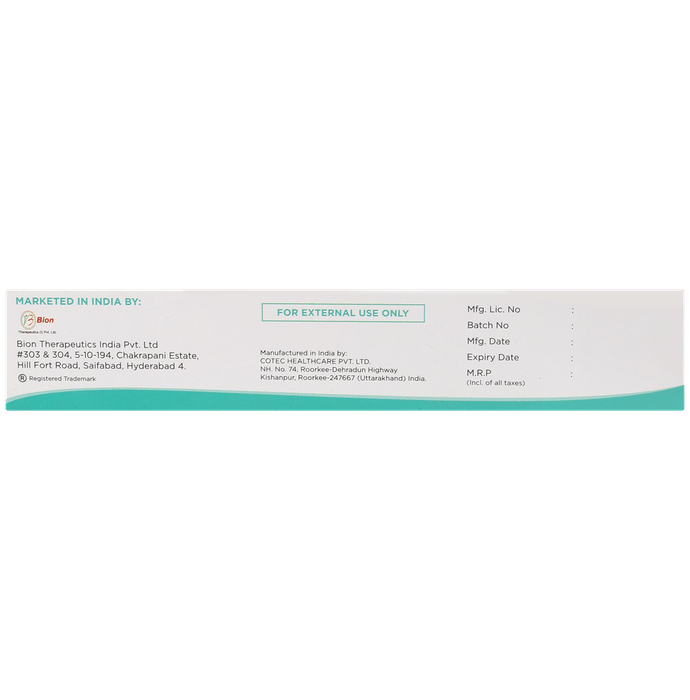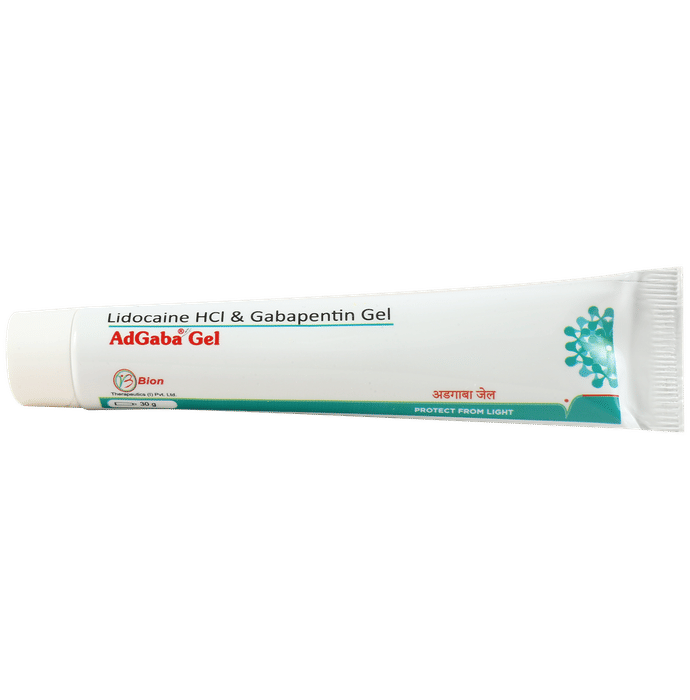
In Neuropathic pain Adgaba Gel is a combination of medicines used to treat long-lasting (chronic) pain caused by nerve damage due to diabetes, shingles or spinal cord injury. It reduces pain and its associated symptoms such as mood changes, sleep problems, and tiredness. Gabapentin, an active ingredient of this medicine, is thought to work by interfering with pain signals that travel through the damaged nerves and the brain.
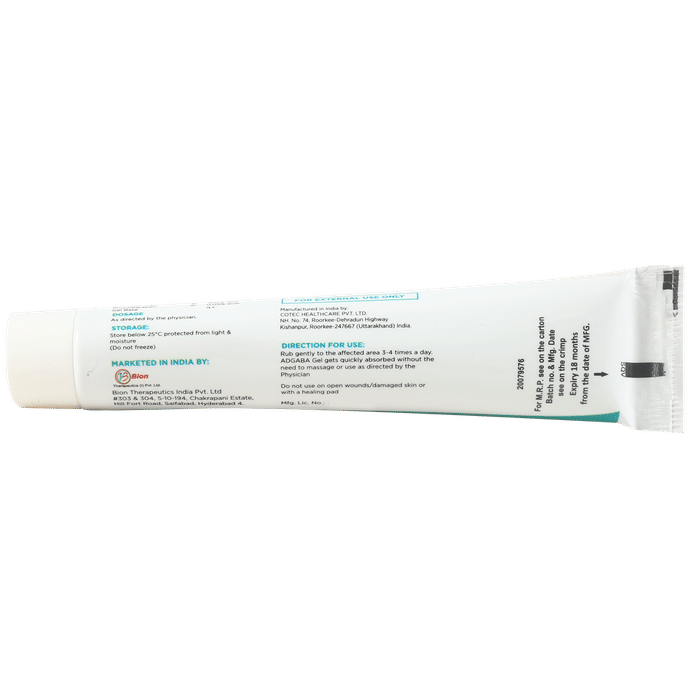
This medicine is for external use only. Use it in the dose and duration as advised by your doctor. Check the label for directions before use. Clean and dry the affected area and apply the gel. Wash your hands after applying, unless hands are the affected area.
- Alcohol : None
No interaction found/established | - Pregnancy : CONSULT YOUR DOCTOR
The safety of Adgaba Gel during pregnancy has not been established. There are no adequate and well-controlled studies in pregnant women, and animal data on reproductive toxicity are insufficient. Your doctor will weigh the benefits and any potential risks before prescribing. | - Breast feeding : SAFE IF PRESCRIBED
Adgaba Gel may be safe to use during breastfeeding. Animal studies have shown low or no adverse effects to the developing baby; however, there are limited human studies. | - Driving : None
No interaction found/established | - Kidney : None
No interaction found/established | - Liver : None
No interaction found/established
If you miss a dose of Adgaba Gel, apply it as soon as possible. However, if it is almost time for your next dose, skip the missed dose and go back to your regular schedule. Do not double the dose.
What is Adgaba Gel used for?::: Adgaba Gel is used to help manage neuropathic pain. It works by cooling the skin, then warming it up. This cooling and warming action may help interrupt pain signal transmission through nerves to the brain and reduce pain sensation.| What serious allergic reactions could Adgaba Gel cause? ::: Rare but severe allergic reactions to Adgaba Gel may include rash, swelling, redness, persistent itching, difficulty breathing, or numbness spreading away from the area. Seek urgent medical help if these occur.| Can Adgaba Gel be used by children or older adults? ::: Adgaba Gel is typically meant for adults aged 18 years and older. For older adults, start with a small quantity to minimize any increased sensitivity or risk.| What symptoms mean I should stop using Adgaba Gel and see a doctor?::: Unexplained severe rash, swelling, burning, persistent skin ulcers, or trouble breathing after using Adgaba Gel require immediate medical attention.| Are there risks if Adgaba Gel is used for too long or on a large skin area?::: Long-term or high-quantity use of Adgaba Gel on large body areas may increase the risk of toxicity or severe reactions. Follow your doctor?s advice on dosage and application areas.| Should I avoid covering the Adgaba Gel-treated area with a bandage? ::: Unless your doctor advises otherwise, avoid wrapping or bandaging the area after Adgaba Gel application, as this may increase absorption and side effects.| What are the warning signs of nerve damage from using Adgaba Gel? ::: If you experience severe numbness, tingling far from the treated area, or weakness, stop using Adgaba Gel and contact your doctor.| Should I share Adgaba Gel with others who have similar pain?::: No. Never share Adgaba Gel, even with people who have similar pain, as their health history and medication needs may be different.
Adgaba Gel is a combination of two medicines: Gabapentin and Lidocaine. Gabapentin is an alpha 2 delta ligand which decreases pain by modulating calcium channel activity of the nerve cells. Lidocaine is a local anesthetic which works by blocking pain signals from the nerves to brain thereby decreasing the sensation of pain. Together, they relieve neuropathic pain (pain from damaged nerves).