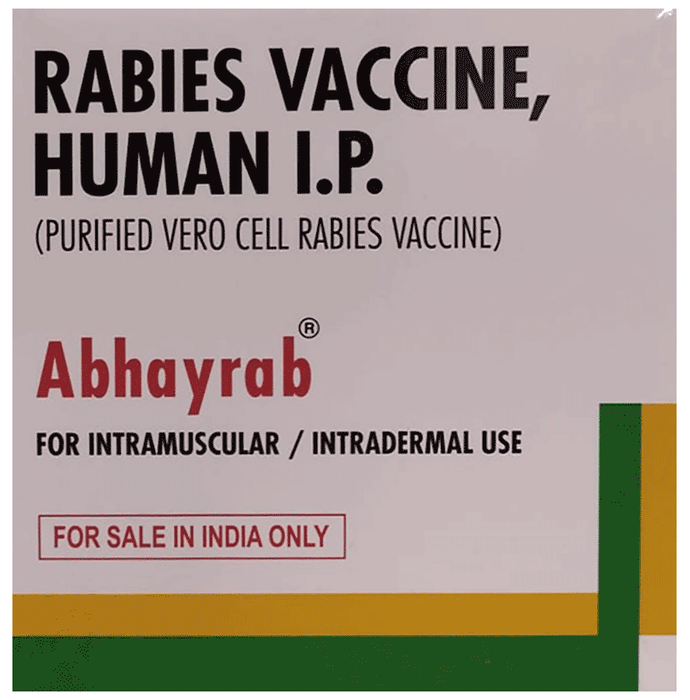
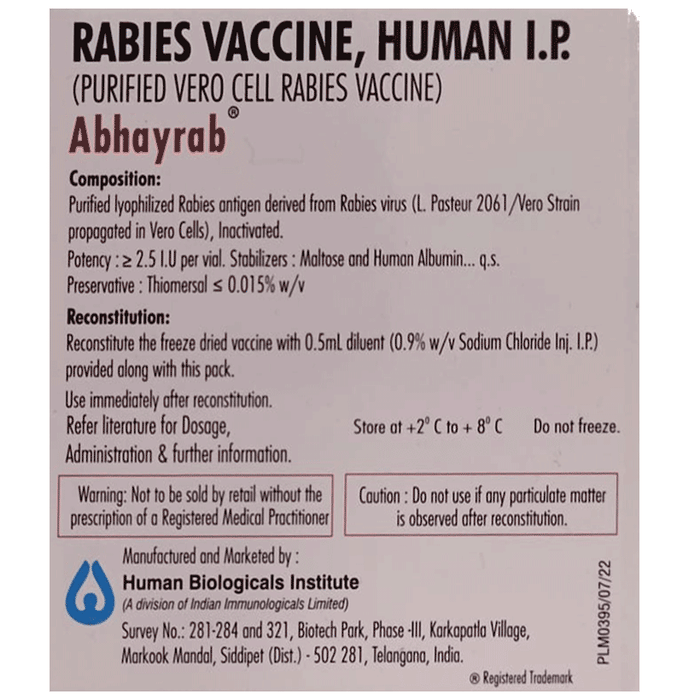
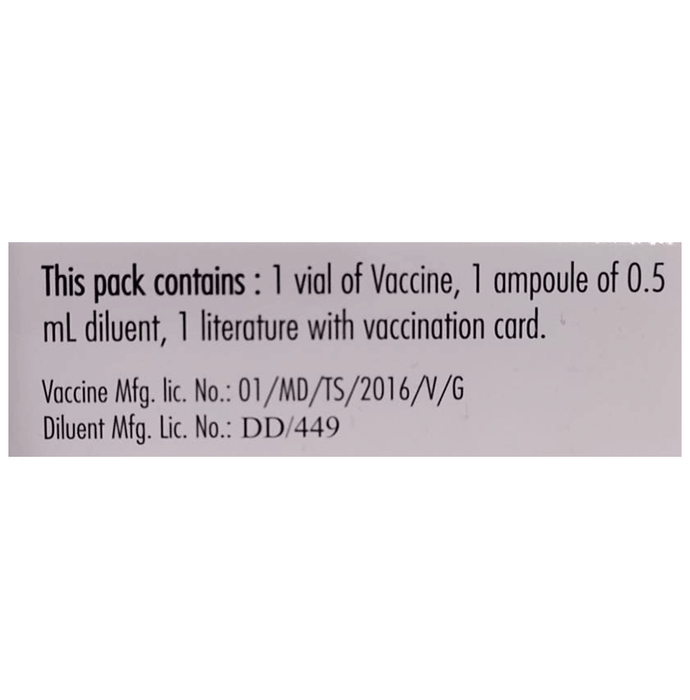
In Prevention of Rabies Rabies is a serious disease caused by the rabies virus. It is transmitted through the saliva of infected animals. Abhayrab Vaccine is given to people who are at higher risk of coming in contact with rabies virus like veterinarians, animal keepers, hunters, butchers, personnel in rabies research laboratories, etc., or those with a prior visit to areas in which rabies is endemic. The vaccine helps develop immunity by forming antibodies, that protect against infection caused by viruses. Vaccination can also prevent the disease if it is given to a person after they have been exposed. It is to be administered only by or under the supervision of your doctor. You should not self-administer this medicine.
Your doctor or nurse will give you this medicine. Kindly do not self administer.
- Alcohol : CONSULT YOUR DOCTOR
It is not known whether it is safe to consume alcohol with Abhayrab Vaccine. Please consult your doctor. | - Pregnancy : CONSULT YOUR DOCTOR
The safety of Abhayrab Vaccine during pregnancy has not been established. There are no adequate and well-controlled studies in pregnant women, and animal data on reproductive toxicity are insufficient. Your doctor will weigh the benefits and any potential risks before prescribing. | - Breast feeding : SAFE IF PRESCRIBED
Available human data suggest that the drug does not pass into breast milk in clinically significant amounts and is unlikely to harm the infant. | - Driving : CONSULT YOUR DOCTOR
It is not known whether Abhayrab Vaccine alters the ability to drive. Do not drive if you experience any symptoms that affect your ability to concentrate and react. Please consult your doctor. | - Kidney : CONSULT YOUR DOCTOR
There is limited data available on the use of Abhayrab Vaccine in patients with kidney disease. Please consult your doctor. | - Liver : CONSULT YOUR DOCTOR
There is limited data available on the use of Abhayrab Vaccine in patients with liver disease.
If you miss a dose of Abhayrab Vaccine, please consult your doctor.
How does rabies spread?::: The rabies virus is transmitted in the saliva of infected animals. People usually become infected with the virus if they get bitten by an infected animal. However, any contact with the saliva of an infected animal (alive or dead) can potentially lead to rabies infection if the person has an opening in the skin or the saliva gets into their eyes, nose or mouth.| Is rabies preventable?::: Rabies is a 100% preventable disease. Proper wound management and simultaneous administration of Abhayrab Vaccine combined with rabies immunoglobulin (RIG) is considered invariably effective in preventing rabies, even after high-risk exposure.| What are the symptoms of rabies?::: The rabies virus attacks the nervous system (brain and spinal cord). The first symptoms of rabies are similar to a flu-like illness which can be identified as fever, headache and general discomfort. Within days, the disease can progress to symptoms such as anxiety, confusion, agitation, abnormal behavior, delirium and hallucinations.| Who should get this vaccine?::: Rabies vaccine is recommended for persons in high-risk occupational groups, such as veterinarians and their staff, animal handlers, rabies researchers and certain laboratory workers. International travelers who are likely to come in contact with animals in areas where cases of dog rabies are common. People should remain cautious and must get Abhayrab Vaccine, especially if they will have limited access to appropriate medical care in such areas.| Can a pregnant woman receive Abhayrab Vaccine if exposed to rabies?::: Yes, Abhayrab Vaccine can be taken by a pregnant woman. Cases of any fetal abnormalities in pregnant women have not been reported with the use of Abhayrab Vaccine. The doctor may even suggest routine pre-exposure vaccination against rabies if the risk of exposure is high.| What are the side effects of Abhayrab Vaccine?::: Most of the side effects of Abhayrab Vaccine are mild, such as soreness and redness at the injection site. Moderate problems, including hives, pain in the joints and fever, are possible in a small percentage of patients (6%) who are given booster doses.| Who should not receive Abhayrab Vaccine?::: Abhayrab Vaccine is not recommended for routine use in the general population. It should not be used if a person is moderately or severely ill. If you have any doubts, consult your doctor.
Abhayrab Vaccine is an inactivated vaccine. It helps develop immunity by forming antibodies, which are proteins that protect against infection caused by viruses.